Hvar's Wild Flowers in the Late Summer

Marion Podolski, author of the exquisite blog Go Hvar, continues her illustrated seasonal researches into Hvar's abundant wild flowers.

Bright roadside field marigold, Jelsa October 2016. Bright roadside field marigold, Jelsa October 2016. Photo: Vivian Grisogono

Following on from our Guide to Hvar’s Wildflowers – Spring Edition, I’ve been out and about looking for what’s in bloom at the end of summer. These are mostly in the high country around the peak of Sv Nikola and on the Vorh plateau, although some are down around sea-level, even right on the beach in some cases.

Heather with black pine on Hvar's highest peak. Photo Marion Podolski

I have to say I was encouraged to find so many wildflowers in September, after what has been a scorching summer. My aim in writing the blog is to identify each one, and tag the photos with an official name in Latin, English and Croatian. With my previously somewhat inexpert pictures in mind, this time I was careful to include more of the plant (leaves, seedpods, etc) in my reference photos. And let’s hope the upcoming new series of that wonderful Croatian TV series  Lovac na bilje, (The Plant Hunter) includes  a trip to the Dalmatian coast and islands, as that could really help me identify the plants here!

Flowers on the beach on Sv.Klement. Photo Marion Podolski

Here’s the reference table of late-summer flowers. Usual disclaimer applies: while I have a reasonable confidence in most of the names, some are tentative especially when very similar suspects exist! I’d welcome any feedback from those with a rather better grounding in botany! Click on the images for a bigger picture, and links take you to wikipedia or plantea to find out more.
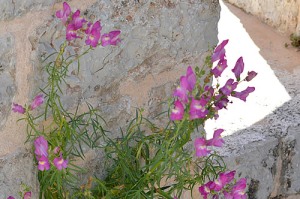
Antirrhinum majus

Antirrhinum majus
Snapdragon
Zijevalica
..........
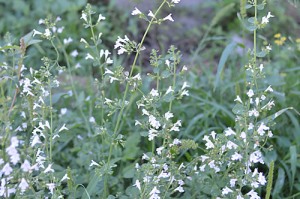
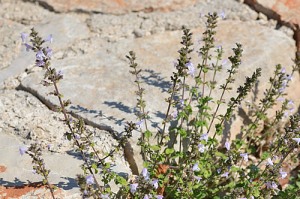
Calamintha napeta

Calamintha napeta
Lesser calamint
Velecvjetna gorska metvica
Mint family but could be wild basil?
..........
..........

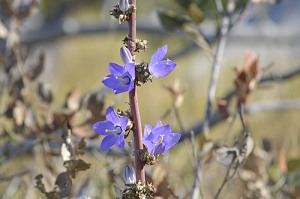
Campanula Pyramidalis

Campanula pyramidalis
Chimney bellflower
Piramidalni zvončić
 ..........

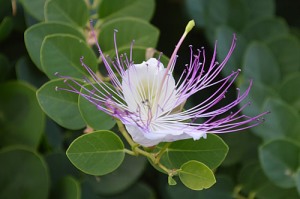
Capparis spinosa

 ..........

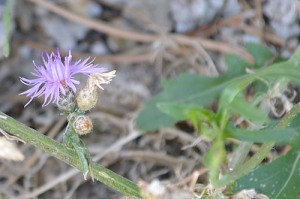
Centaurea glaberrima Tausch

Centaurea glaberrima Tausch or Centaurea jacea
Bare knapweed
Livadna zečina
Not sure exactly which variant of Centaurea this is. Reference pictures differ!
 ..........

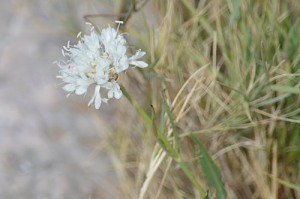
Cephalaria leucantha

Flower head is actually a round ball, hence the Croatian name of White head!
 ..........

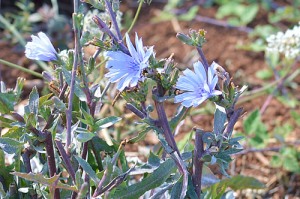
Cichorium intybus

Cichorium intybus
Chicory
Cikorija
 ..........

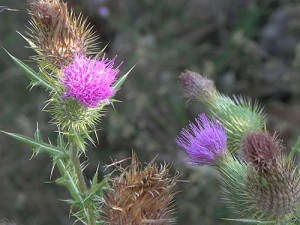
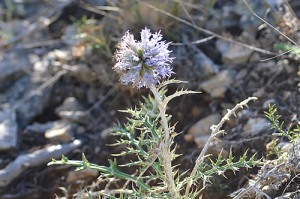
Cirsium vulgare

 ..........

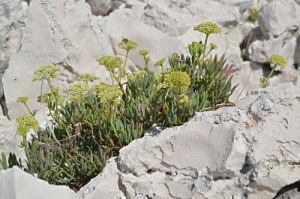
Crithmum maritima

This photo taken on a Sv Klement beach. A similar plant is Salicornia, which turns red as it ages. Both samphire and salicornia are used in cooking.
 ..........

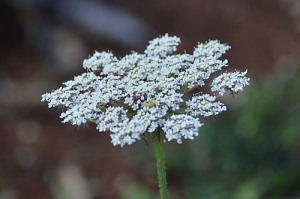
Daucus carota

Daucus carota
Wild carrot
Divlja mrkva
 ..........
 ..........

Dittrichia viscosa

Dittrichia viscosa
Woody or sticky fleabane
Ljepljini oman / brušćinac / bušina
 ..........

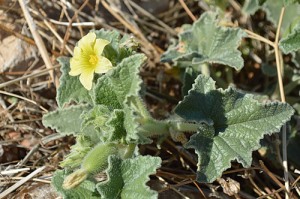
Ecballium

Ecballium
Squirting cucumber
Divlji krastavac
 ..........

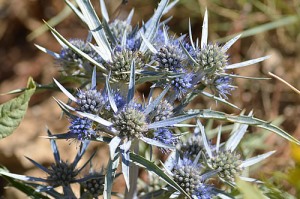
Echinops ritro

Echinops ritro
Southern globethistle
Globus čičak
 ..........
 ..........

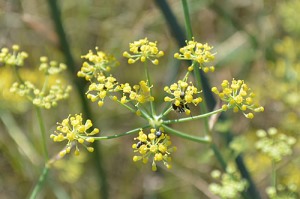
Foeniculum vulgare

 ..........

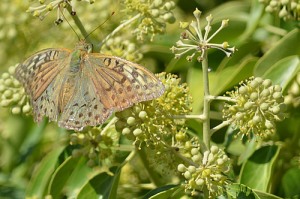
Hedera helix poetarum nyman

This version of ivy is native to southern Europe, and the flowers are high in nectar. Which is why this mound of ivy on Vorh was absolutely swarming with happy bees and butterflies! This one is a Cardinal.
 ..........

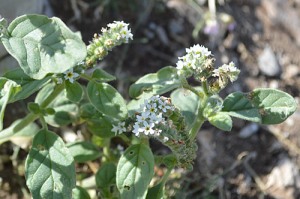
Heliotropium europaeum

 ..........

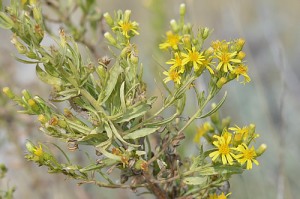
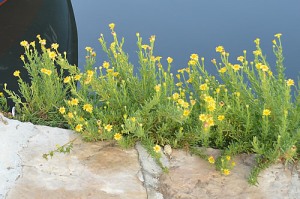
Inula crithmoides

Inula Crithmoides / Limbarda crithmoides
Golden Samphire
Primorski oman
Compare to samphire/motar above
..........

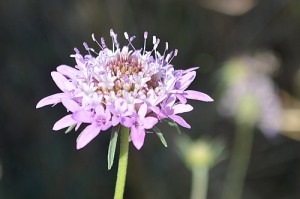
Knautia arvenensis

 ..........

Limonium cancelatum

Limonium cancelatum
Lattice sea-lavender
Rešetkasta mrižica or Rešetkasta travulja
This tiny variant of sea-lavender appears to be local to Croatia. Seen on Sv Klement beach.
 ..........

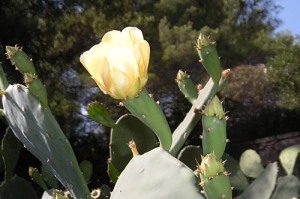
Opuntia ficus-indica

Opuntia ficus-indica
Opuntia / prickly pear
Opuncija
An exotic import from Mexico that grows well here!
 ..........

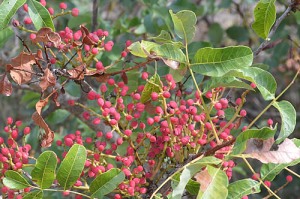
Pistacia terebinthus

The berries on this bush are really pretty, but the Croatian name is “Smelly“
 ..........

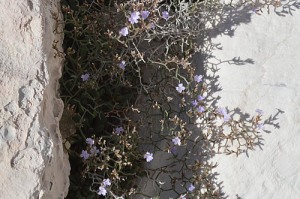
Plumbago europaea

Plumbago europaea
Common leadwort
Vranjemil?
Few references  even mention this European version of plumbago! Flower looks very similar to the Scilla (below), but this has 5 petals, not 6 and the clusters are different.
 ..........

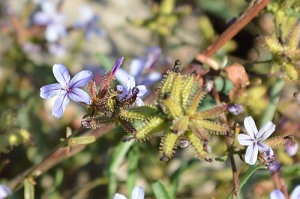
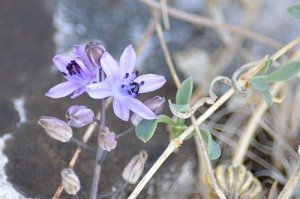
Scilla autumnalis

Scilla autumnalis or Prospero autumnale
Autumn squill
Jesenji procjepak
In this case, the leaves are misleading as they belong to another plant!
 ..........

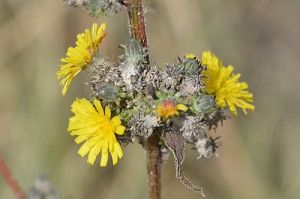
Sonchus asper

Sonchus asper
Perennial sow-thistle
Modrozeleni ostak or Kostriš
 ..........

“Weeds are flowers too, once you get to know them” ~ A.A. Milne

© Marion Podolski 2016

 This article has been reproduced with kind permission from Marion's blog Go Hvar, Ramblings about a far island. Visit the blog for all kinds of information about Hvar, from artistic to epicurean!


Nalazite se ovdje: Home Novosti iz prirode Hvar's Wild Flowers in the Late Summer

Novosti: Ekologija.hr

  • Guardian and Mongabay reveal approaches to officials and MPs on behalf of Vantara zoo ahead of UK-chaired Cites meeting on endangered animal imports

    British government ministers were told not to engage formally with Vantara, the controversial mega-zoo run by the Indian billionaire Anant Ambani, after lobbying efforts by the private animal sanctuary in the run-up to a UK-chaired meeting on the trade in endangered species, according to documents.

    This week, the UK heads a 32-country committee meeting in Geneva of Cites, the United Nations body that regulates trade in endangered species. The meeting will examine how India has responded to compliance concerns about imports of endangered animals.

    Continue reading...

  • The handover marks the end of a 13-year licence for Smart DCC, a subsidiary of Capita, after years of spiralling costs and delays

    Control over Great Britain’s 39m smart meters has passed to a non-profit startup after its former owner presided over more than a decade of spiralling costs and delays in the troubled network.

    The company owned by crisis-hit outsourcing firm Capita has promised a “seamless transition” to its not-for-profit successor, which will take over running the data network connecting the smart meters from this week.

    Continue reading...

  • Hortobágy, Hungary: Their sheer size is striking enough, but the noise is something else, especially when they gather in huge migratory flocks

    With a standing height of 1.4 metres, common cranes are Europe’s tallest birds and at this famous national park they collect in astonishing numbers as they migrate.

    The autumn count is 180,000, although the only accessible spot to see them supports a sub-roost of 50,000. Each bird has a wingspan of 2 metres and the flight is slow and rhythmically precise. The visual effect of any large airborne congregation is at the scale of a whole landscape and its skies above.

    Continue reading...

  • Timau’s industry has provided local Kenyans with an economic lifeline. But now, many believe it has made them seriously ill

    When Reuben Muriki fainted while doing a chore in the compound of his home near the horticultural town of Timau in central Kenya several years ago, it marked the start of a series of increasingly serious health episodes.

    His joints became swollen, his skin became discoloured and he found breathing difficult. He was in and out of hospital, and was forced to quit his work as a pesticide sprayer at a flower farm. Doctors treated him for suspected tuberculosis in vain.

    Continue reading...

  • Patroclo and Achille’s interspecies affair sheds new light on social and sexual relations between animals, scientists say

    In ancient myth, Achilles and Patroclus were two Greek heroes of the Trojan war whose intense bond was believed by some to have turned into a sexual relationship.

    In modern science, they are a bull, Achille, and a donkey, Patroclo, whose tender interspecies affair has helped to shed new light on social and sexual interactions between animals.

    Continue reading...

  • UN-backed report finds even temporary rises above Paris agreement target could cause harm to glaciers and polar ice sheets

    Earth’s icy regions face such dangerous melting that global heating should be brought back below 1C after an inevitable period of overshooting global temperature targets, a UN report has found.

    Permanent and widespread losses of snow and ice expose a “persistent myth” that overshooting the 1.5C target of the Paris climate agreement – to 2C or 3C – could be manageable or even preferable to urgent cuts to emissions, the report found.

    Continue reading...

  • Devon nature reserve says ‘reckless’ theft of narrow-headed ant colony sets back years of conservation work

    A nest containing up to 5,000 of England’s rarest ant species has been stolen from a nature reserve, a conservation charity has said.

    Devon Wildlife Trust (DWT) said a nest of narrow-headed ants had been dug up and taken from Chudleigh Knighton Heath nature reserve in south Devon, which is the last place in England where the species still exists.

    Continue reading...

  • At more than $52m, the race has become the most expensive in US history, but residents are fed up with flooding

    Aida Havel mulled her fate over coffee after working the early voting polls all day in Kill Devil Hills, North Carolina. “We are trapped,” she concluded.

    The Dare county commission candidate lives about 50 miles (80km) south, on Hatteras Island on the state’s Outer Banks.

    Continue reading...

  • From feeding schoolchildren to recycling tyres, these entrepreneurs are challenging stereotypes while solving social and environmental problems

    Africa is thought to have a higher proportion of female entrepreneurs than any other continent and yet many still struggle to access financing. Four business leaders from Nigeria, Uganda, Kenya and Malawi tell us about the inspiration behind their success – and the challenges women still face.

    Continue reading...

  • A Guardian investigation has found that despite a recommendation to slow down, leading shipping companies continue to travel above advised speeds in a key habitat for cetaceans

    Marine biologist Alice Barbarioli waits with her camera trained on the horizon. A few minutes earlier, the hydrophone beneath the Pelagos research vessel detected codas – the sequence of clicks sperm whales use to communicate.

    The sperm whale reveals its head and dorsal fin as those onboard the vessel in the Pelagos sanctuary, a conservation area established to protect marine mammals in the north-western Mediterranean, rush to take photos and note the rhythm of its breathing. After a few minutes, the animal arches its back, and begins to head back into the depths of the sea. They wait to catch a glimpse of its tail.

    Continue reading...

Novosti: Cybermed.hr

  • Nova studija je otkrila da žene koje su češće jele hranu s visokim udjelom šećera imaju veći rizik od raka dojke, dok ni ukupni šećer u prehrani ni konzumacija voća nisu pokazali statistički značajnu povezanost. Voće je činilo oko 43% ukupnog šećera u prehrani, a prosječni unos šećera bio je 44 grama dnevno. Žene koje su konzumirale više od dvije porcije hrane s visokim udjelom šećera tjedno imale su 28% veći rizik od onih koje su jele jednu porciju mjesečno ili manje.

  • Protein koji sudjeluje u izgradnji zuba mogao bi se jednog dana koristiti kako bi se oštećenim zubima omogućilo da se sami obnove, pokazuju rezultati nove studije provedene u SAD-u.

  • Od otpornog škroba do staničnih stijenki biljaka, znanstvenici istražuju skrivenu konkurenciju i suradnju među crijevnim bakterijama, postavljajući intrigantna pitanja o tome što se događa s različitim vlaknima nakon što dođu do debelog crijeva.

  • U nedavno objavljenoj studiji znanstvenici su procijenili učinke konzumacije oraha na imunoglobuline (Ig) i antitijela usmjerena protiv lipoproteina niske gustoće modificiranih malondialdehidom (MDA-LDL). Nakon dvije godine, dugotrajna konzumacija oraha bila je povezana s ukupnim koncentracijama IgG-a u serumu koje su bile približno 6% više nego u kontrolnoj skupini, što upućuje na mogući utjecaj prehrane na cirkulirajuće imunološke biomarkere. 

  • Aorta se često prvenstveno smatra najvećom krvnom žilom u tijelu - izdržljivim kanalom koji dostavlja krv bogatu kisikom iz srca u svaki organ. No, sve više dokaza upućuje na to da je stijenka aorte također aktivno imunološko okruženje. Imunološke stanice koje se nalaze unutar ili su regrutirane u različite dijelove aorte mogu utjecati na to kako se ova žila razvija, prilagođava mehaničkom stresu i postaje osjetljiva na bolesti.

  • Međunarodna studija izvještava o 60-postotnom preživljenju bez progresije bolesti 10 godina nakon autologne transplantacije koštane srži, pružajući važne dokaze o trajnim pozitivnim kliničkim ishodima i dugoročnoj sigurnosti kod pacijenata liječenih zbog rane, teške sistemske skleroze.

  • Novo istraživanje pokazuje da osobe s glioblastomom imaju aktivnije trombocite – stanice koje sudjeluju u zgrušavanju krvi. Trombociti također komuniciraju s drugim stanicama i mogu utjecati na imunološku aktivnost. Hiperaktivni trombociti kod osoba s glioblastomom usporavaju djelovanje T-stanica koje se bore protiv raka, što može pridonijeti rastu tumora i napredovanju bolesti.

  • Prepune karotenoida i drugih bioaktivnih spojeva, klice brokule i mikrozelenje privlače znanstvenu pozornost. Karotenoidi su prehrambeni pigmenti koji doprinose boji voća i povrća te pomažu u nekoliko fizioloških procesa. Karotenoidi uključuju karotenoide provitamina A, poput beta-karotena, alfa-karotena i beta-kriptoksantina, te karotenoide koji nisu provitamin A, poput luteina, zeaksantina i likopena. Karotenoidi mogu utjecati na osjetljivost na inzulin, metabolizam lipida, adipogenezu i upalnu signalizaciju.

  • Zubna caklina je visoko mineralizirani vanjski sloj zuba. Caklina štiti unutarnje slojeve zuba od šećera i kiselina koje unosimo hranom, kao i od svakodnevnog žvakanja, grizenja i trenja. Ona je najtvrđe tkivo u ljudskom tijelu.

  • Znanstvenici s Instituta za imunologiju La Jolla (LJI) i Sveučilišta u Washingtonu (UW) otkrili su da pacijenti s lupusom imaju neobične mutacije koje njihova tijela mogu pretvoriti u bojna polja. Spomenute su mutacije raširene u imunološkim stanicama zvanim neutrofili. Druge imunološke stanice doživljavaju mutirane neutrofile kao prijetnju – te pokušavaju uzvratiti napad. Ta unutarnja borba može doprinijeti razvoju bolnih upala, iscrpljujućih bolova u zglobovima i drugih ozbiljnih simptoma lupusa diljem tijela.

Novosti: Biologija.com