-
UN forecasters warn of worsening conditions in 45 countries currently experiencing severe food insecurity
About 50 million people are likely to be pushed into acute hunger before the end of next year by the rapidly developing El Niño weather system, according to forecasting.
This is in addition to the hundreds of millions of people already facing dangerous levels of hunger, owing to years of drought in parts of Africa and pressure on food prices from the war in Iran.
Continue reading...
-
The beady-eyed, Pokémon-like leaf sheep is far more ingenious than us land mammals
A neon green punk sheep that lives underwater. A solar-powered slug that can perform photosynthesis. If you are seeking beauty, brains and a wonderfully innovative lifestyle, then vote leaf sheep.
The leaf or sea sheep, Costasiella kuroshimae, is a sea slug about the size of a grain of rice. Like a sheep, it grazes on green stuff – certain species of algae, which it finds in tropical waters around Japan, Indonesia and the Philippines. But its sheepy nickname does it a disservice because it is far more ingenious than us land mammals.
Continue reading...
-
Iran conflict windfall over three months reignites calls for companies ‘cashing in on human misery’ to pay for environmental damage
Eight of the biggest oil companies amassed profits of more than $90bn (£67bn) in just three months as the Iran conflict sent energy prices soaring and the emissions-fuelled climate crisis caused deadly heatwaves.
The windfall war profits have reignited calls for oil and gas supermajors such as Saudi Aramco and BP to pay for the environmental damage caused by “cashing in on human misery” and fund a rapid transition to renewable energy.
Continue reading...
-
Farmers advised to vaccinate after recent hot weather provides ideal conditions for virus-carrying midges
There has been an alarming surge in the number of sheep affected by an outbreak of bluetongue in the UK, and farmers whose livestock are at risk are being urged to move them out of areas where midges are plentiful.
The viral disease, which does not necessarily kill sheep but makes them ill and can have a long recovery time, presents as high fever and swelling of the lips and tongue. The tongue may go blue and even protrude from the mouth.
Continue reading...
-
Over-the-counter treatments for cats and dogs contain chemicals that are banned in pesticides and pollute waterways
Over-the-counter flea treatment for cats and dogs should be banned as millions of hazardous chemicals are unnecessarily applied to UK pets each year, a parliamentary report has concluded.
Cats and dogs are widely treated with topical, or “spot on”, treatments that include insecticides to prevent fleas. Vets often recommend regular treatments as a preventive measure, even when the animals do not have fleas.
It’s Invertebrate of the Year again! Every day from 3-12 August, we will be profiling one of the thousands of amazing invertebrates that our readers have nominated, and when you have heard about all of them, we will open the voting so you can choose your favourites. Don’t hesitate to get in touch with thoughts and ideas. Email us at [email protected] with Invertebrate in the subject line.
Continue reading...
-
New research shows early-warning species is on the move, expanding or contracting geographic range and changing altitude
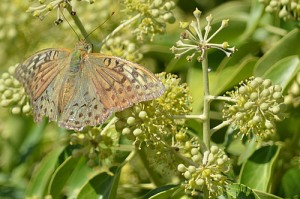
Butterflies, often considered a “sentinel of change”, are on the move across every continent they inhabit, shifting to survive as global heating reshapes their environment.
About one in 10 species have already expanded or contracted their geographic range, or shifted in altitude, according to a global study published in Nature Ecology & Evolution.
Continue reading...
-
As climate disaster stares us in the face, the radical right says ‘Embrace the Mediterranean life’. Embrace death, more like it
Can’t you leftists understand? Mass death is good for you. Reject the woke love of life! Welcome civilisational collapse! Watch it all burn, then dance in the ashes! This, roughly speaking, is how the dismissal of climate action is now being justified: the argument has shifted from science denial to outright nihilism.
The new incendiary spirit is exemplified by that serial arsonist Allister Heath, editor of the Sunday Telegraph. In a column in the Daily Telegraph last week, originally titled “Britain can’t stop climate change. Scrap net zero and embrace Mediterranean life”, he argued that “climate change is real” but “the war against global warming has been lost”.
George Monbiot is a Guardian columnist
Continue reading...
-
This week, we launched our third annual vote to honour nature’s unsung heroes. The Guardian’s natural history writer – and woodlouse fanboy – Patrick Barkham answered your questions
Narethosyne asks: It’s often said that insects will outlast humanity, as they’ve managed to survive in some very inhospitable environments for millions of years. Do you think that human stupidity might actually be able to kill even the hardiest of insects off if we don’t take better care of our planet?
Patrick:
I agree we need to take much better care of the planet. However the more I learn of other invertebrate life (and I don’t know much), the more I believe that other species will survive whatever toxic horrors we unleash upon the planet. It seems more likely that we will become extinct before many other species.
We are such a strange species, so capable of goodness and so easily moved to argument and greed, but I still think we can learn to think and act for the long-term. There is a big awakening of eco-consciousness in the global north and perhaps we can belatedly re-learn the wisdom of many indigenous peoples who have lived in better balance with their fellow species.
Thanks Sprockertime, I love your question. The answer is yes!
I’ve done all kinds of fancy things for wildlife in my garden (filling in a “sunken garden” with five tonnes of chalk raised a few eyebrows in my neighbourhood) and I salute everyone who has erected bird boxes and bug hotels.
Continue reading...
-
Cristian Lucañas has discovered multiple species of cockroach in the Philippines, and believes there’s far more to the much-maligned insect than meets the eye
When Cristian Lucañas tells people about his job, their response is normally a mix of shock and confusion. “The majority would actually be questioning why,” says Lucañas, 32, who is the only entomologist specialising in cockroaches in the Philippines, where he is known as the “Cockroach Lord”.
He recalls one person, apparently perplexed at the insects’ existence, asking simply: “Did God create cockroaches?” Others seek advice on how best to kill them.
Continue reading...
-
Scientists find ruminants emit more of greenhouse gas individually than cows, although total contribution tiny compared with domesticated livestock
When cows belch and fart they release methane, which is warming the planet, but how does this compare with the digestive gases emitted by wild animals? A new study shows that deer add the greatest amount of methane to the atmosphere, but compared with domesticated livestock their total contribution is minuscule.
Methane is a potent greenhouse gas, which has been rising rapidly in recent years, but it is hard to pin down exactly where it is coming from. Like domesticated cows, wild ruminants such as deer, moose and llamas rely on bacteria to help them break down the fibrous plants they eat, releasing methane as they go. To understand how much methane wild ruminants release, Theresia Yazbeck, from the Max Planck Institute for Biogeochemistry in Jena, Germany, and colleagues used recent estimates of global wild animal populations and combined these with methane emission estimates based on body mass and diet.
Continue reading...