Hvar's Wild Flowers in the Late Summer

Marion Podolski, author of the exquisite blog Go Hvar, continues her illustrated seasonal researches into Hvar's abundant wild flowers.

Bright roadside field marigold, Jelsa October 2016. Bright roadside field marigold, Jelsa October 2016. Photo: Vivian Grisogono

Following on from our Guide to Hvar’s Wildflowers – Spring Edition, I’ve been out and about looking for what’s in bloom at the end of summer. These are mostly in the high country around the peak of Sv Nikola and on the Vorh plateau, although some are down around sea-level, even right on the beach in some cases.

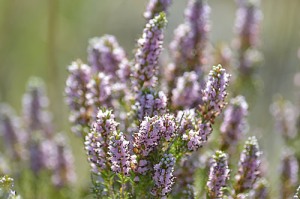
Heather with black pine on Hvar's highest peak. Photo Marion Podolski

I have to say I was encouraged to find so many wildflowers in September, after what has been a scorching summer. My aim in writing the blog is to identify each one, and tag the photos with an official name in Latin, English and Croatian. With my previously somewhat inexpert pictures in mind, this time I was careful to include more of the plant (leaves, seedpods, etc) in my reference photos. And let’s hope the upcoming new series of that wonderful Croatian TV series  Lovac na bilje, (The Plant Hunter) includes  a trip to the Dalmatian coast and islands, as that could really help me identify the plants here!

Flowers on the beach on Sv.Klement. Photo Marion Podolski

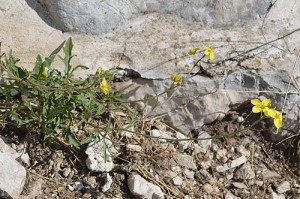
Here’s the reference table of late-summer flowers. Usual disclaimer applies: while I have a reasonable confidence in most of the names, some are tentative especially when very similar suspects exist! I’d welcome any feedback from those with a rather better grounding in botany! Click on the images for a bigger picture, and links take you to wikipedia or plantea to find out more.
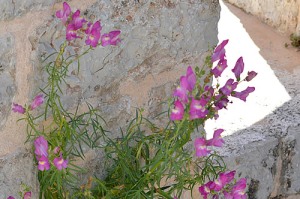
Antirrhinum majus

Antirrhinum majus
Snapdragon
Zijevalica
..........
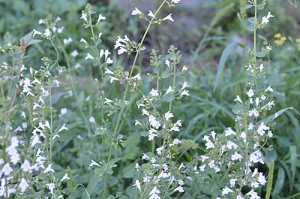
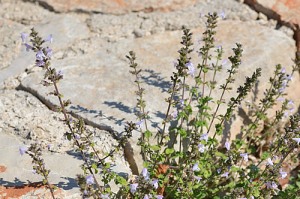
Calamintha napeta

Calamintha napeta
Lesser calamint
Velecvjetna gorska metvica
Mint family but could be wild basil?
..........
..........

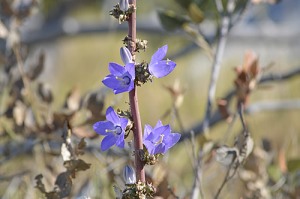
Campanula Pyramidalis

Campanula pyramidalis
Chimney bellflower
Piramidalni zvončić
 ..........

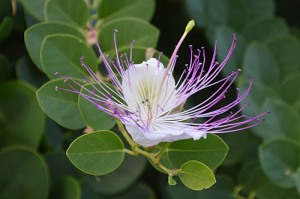
Capparis spinosa

 ..........

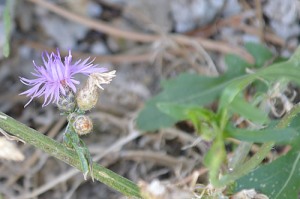
Centaurea glaberrima Tausch

Centaurea glaberrima Tausch or Centaurea jacea
Bare knapweed
Livadna zečina
Not sure exactly which variant of Centaurea this is. Reference pictures differ!
 ..........

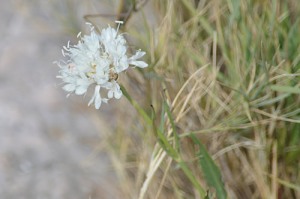
Cephalaria leucantha

Flower head is actually a round ball, hence the Croatian name of White head!
 ..........

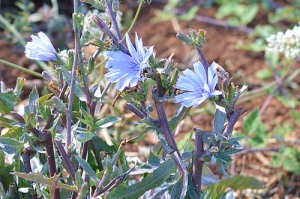
Cichorium intybus

Cichorium intybus
Chicory
Cikorija
 ..........

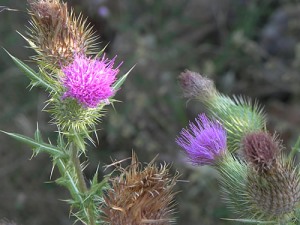
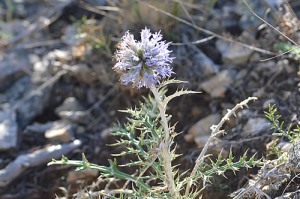
Cirsium vulgare

 ..........

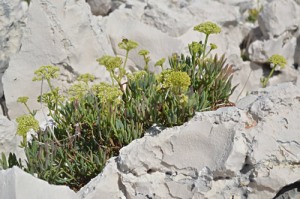
Crithmum maritima

This photo taken on a Sv Klement beach. A similar plant is Salicornia, which turns red as it ages. Both samphire and salicornia are used in cooking.
 ..........

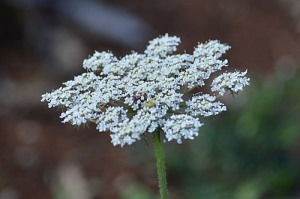
Daucus carota

Daucus carota
Wild carrot
Divlja mrkva
 ..........
 ..........

Dittrichia viscosa

Dittrichia viscosa
Woody or sticky fleabane
Ljepljini oman / brušćinac / bušina
 ..........

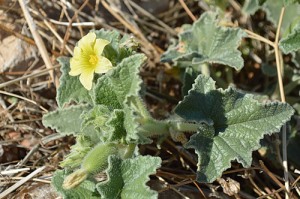
Ecballium

Ecballium
Squirting cucumber
Divlji krastavac
 ..........

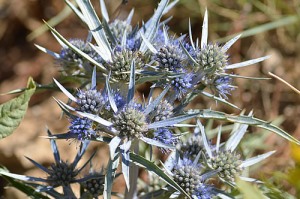
Echinops ritro

Echinops ritro
Southern globethistle
Globus čičak
 ..........
 ..........

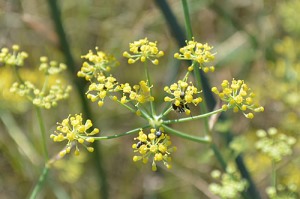
Foeniculum vulgare

 ..........

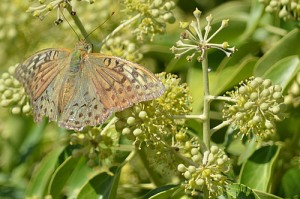
Hedera helix poetarum nyman

This version of ivy is native to southern Europe, and the flowers are high in nectar. Which is why this mound of ivy on Vorh was absolutely swarming with happy bees and butterflies! This one is a Cardinal.
 ..........

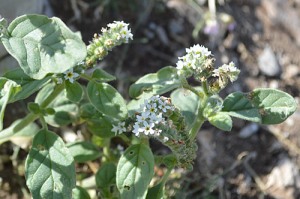
Heliotropium europaeum

 ..........

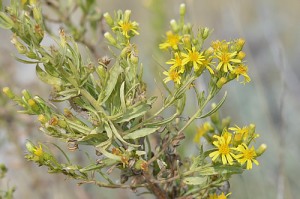
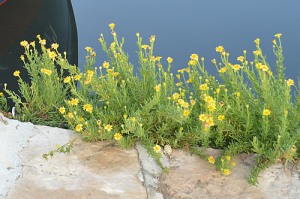
Inula crithmoides

Inula Crithmoides / Limbarda crithmoides
Golden Samphire
Primorski oman
Compare to samphire/motar above
..........

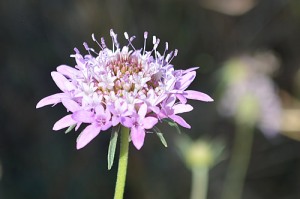
Knautia arvenensis

 ..........

Limonium cancelatum

Limonium cancelatum
Lattice sea-lavender
Rešetkasta mrižica or Rešetkasta travulja
This tiny variant of sea-lavender appears to be local to Croatia. Seen on Sv Klement beach.
 ..........

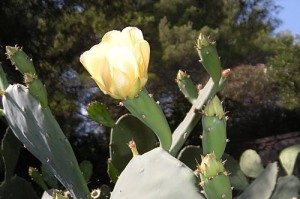
Opuntia ficus-indica

Opuntia ficus-indica
Opuntia / prickly pear
Opuncija
An exotic import from Mexico that grows well here!
 ..........

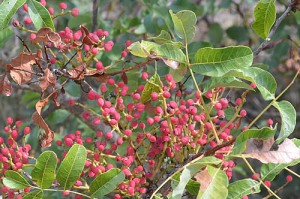
Pistacia terebinthus

The berries on this bush are really pretty, but the Croatian name is “Smelly“
 ..........

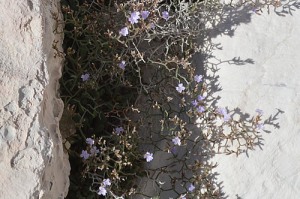
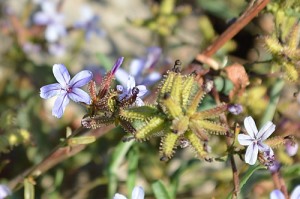
Plumbago europaea

Plumbago europaea
Common leadwort
Vranjemil?
Few references  even mention this European version of plumbago! Flower looks very similar to the Scilla (below), but this has 5 petals, not 6 and the clusters are different.
 ..........

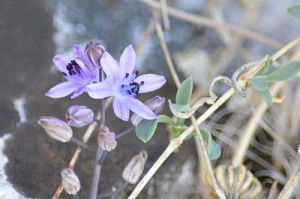
Scilla autumnalis

Scilla autumnalis or Prospero autumnale
Autumn squill
Jesenji procjepak
In this case, the leaves are misleading as they belong to another plant!
 ..........

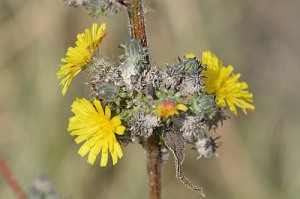
Sonchus asper

Sonchus asper
Perennial sow-thistle
Modrozeleni ostak or Kostriš
 ..........

“Weeds are flowers too, once you get to know them” ~ A.A. Milne

© Marion Podolski 2016

 This article has been reproduced with kind permission from Marion's blog Go Hvar, Ramblings about a far island. Visit the blog for all kinds of information about Hvar, from artistic to epicurean!


Nalazite se ovdje: Home Novosti iz prirode Hvar's Wild Flowers in the Late Summer

Novosti: Ekologija.hr

  • Exclusive: Environment Agency is considering whether to prosecute Huntsman Polyurethanes over emissions of carcinogenic benzene

    A plastic manufacturer in the north of England is facing potential legal action over emissions of benzene, a carcinogenic chemical with no safe level, the Guardian can reveal.

    The Environment Agency (EA) is considering taking legal action against Huntsman Polyurethanes in Teesside for a potential breach of licence, which is a criminal offence.

    Continue reading...

  • Just in case you hadn’t already realised how extraordinary the gigantic group of creatures known as invertebrates are, we’ve gathered together five facts that made our brains hurt (plus one more, because we couldn’t choose). Tell us your favourite extraordinary fact in the comments below

    Did you know that the mantis shrimp can accelerate to strike its prey faster than a .22 calibre bullet. They can smash shells, and even crack aquarium glass with the power of the strike. “These impressive animals are armed with one hammer-like dactyl club on each side of its body. These clubs store energy in elastic, spring-like structures, which are held in place by latch-like tendons. When the latch is released, the stored energy, too, is released – propelling the club forward with explosive force,” says Nane Steinhoff.

    Continue reading...

  • Britain exported 139,000 tonnes of rubbish to Turkey last year, leaving smallholders and poor districts of Adana to cope with the debris, microplastics and toxic smoke

    Plastic debris clings to the reeds in a waterway metres from where Ayhan*, a farmer in Adana, southern Turkey, is harvesting aubergines. “We get pollution from all sides here,” he says, referring to the plastic recycling zone upstream, as well as a nearby textile plant that he suspects is making the water acidic. “The plastics are all there, by the bank, and the fumes come this way.”

    Between May 2021 and July 2024, 13 British companies sent 545 shipments of household and supermarket plastic waste, totalling 52,000 tonnes, to the Kemal Deniz recycling zone, under a mile from Ayhan’s aubergine fields, according to data analysed for the Guardian by the Environmental Investigation Agency (EIA), an international NGO.

    Continue reading...

  • England and Wales provisionally record driest July in nearly 200 years, Met Office says

    July 2026 was the driest month in southern England since records began nearly 200 years ago, the Met Office has said.

    England and Wales also provisionally recorded their driest July since records began in 1836. Wales had its joint warmest July on record for mean temperature, and England recorded its second warmest July.

    Continue reading...

  • Most of the zoo’s 16 lions have struggled to cope with high humidity this summer

    Three lions from a Tokyo zoo have died from suspected heatstroke and others are undergoing treatment, a spokesperson said on Tuesday, as the big cats struggle in Japan’s high levels of humidity.

    Japan sweltered through its hottest summer on record last year and parts of the country have hit 40C in recent weeks, qualifying for the new “cruelly hot day” designation.

    Continue reading...

  • NatureScot refuses licence for hunt on Hebridean island of Sula Sgeir in which up to 2,000 seabirds are killed

    A controversial Scottish seabird hunt will not go ahead for the first time in 400 years, in what campaigners have called a “victory for common sense”.

    In the annual guga hunt, up to 2,000 gannet chicks are killed over a 10-day period on the uninhabited Hebridean island of Sula Sgeir, 40 miles north of Lewis and Harris.

    Continue reading...

  • The UK and Europe have been facing extreme heatwaves – Greenpeace recorded temperatures of up to 53C at one London playground in recent weeks. It’s clear our cities are not equipped to deal with the soaring temperatures brought by the climate crisis. With the ‘Super El Niño’ on its way, next year is forecast to get even hotter. But is anyone really doing anything about it? The Guardian’s deputy opinion editor Kirsty Major goes in search of playgrounds that are adapting to our new reality

    Continue reading...

  • British cheesemakers have struggled to find a use for the 95,000 tonnes of salty whey they produce every year. But researchers may have come up with a solution

    Name: Whey.

    Age: As old as milk.

    Continue reading...

  • From Europe’s deadly heat to floods in Asia, it’s been a terrifying summer. Environment writers Jonathan Watts and Ajit Niranjan answered Reddit users’ questions about their work – and their sources of hope

    Extreme weather supercharged by the climate crisis is fuelling an explosive wildfire season in Europe and extreme rainfall across Asia this summer.

    Global heating made hot, dry and windy weather stoking wildfires at least 20 times more likely in Spain and twice as likely in France. EU officials have said wildfires could still be burning until early November in what threatens to be a record-breaking year for the area of land burned.

    Continue reading...

  • This detritivore – known by a range of colourful names – feeds on rotting plant matter and can withstand toxic pollution

    Chucky pig. Slater. Monkey pea. Roly-poly. Boat-builder. Butchy boy. Cheeselog. Hobbling Andrew. Wood pig. If there were a prize for the range and joyfulness of a creature’s English-language names, the humble woodlouse would undoubtedly triumph over its million-plus invertebrate rivals.

    Over centuries of easy cohabitation with humans, it has acquired more than 300 regional names in Britain alone, and many more in other languages (such as Gwrach y Coed, “witch of the wood”, in Welsh).

    Continue reading...

Novosti: Cybermed.hr

Novosti: Biologija.com