Hvar's Wildflowers and Plants in Winter

Mara of Go Hvar casts her artistic eye over Hvar's surprisingly abundant winter wildflowers.

Field marigold, December 2016 Field marigold, December 2016 Vivian Grisogono

In December, there are not so many flowers in bloom along the pathways of Hvar, but a few linger on from autumn because of the mild temperatures, while others are getting an early start on spring!  For this winter edition, I’ve expanded the scope to include seeds, fruits and leaves as they make quite the splash of colour on our walks!

Vine leaves - a lovely splash of colour in winter!

Here’s my winter reference table, with the usual health warning about my ability to identify plants correctly! So many can be very similar, especially the myriad varieties of small yellow flowers!! Click on the images for a bigger picture, and links go to wikipedia or plantea (Croatian) to find out more.
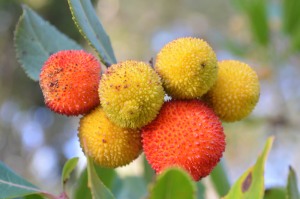

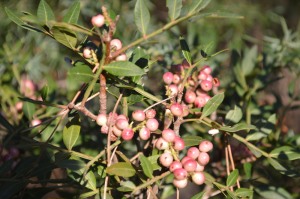
Arbutus

Arbutus
Strawberry tree
Planika
 
Arisarum vulgare
Arisarum vulgare
Friar’s cowl
Croatian not known
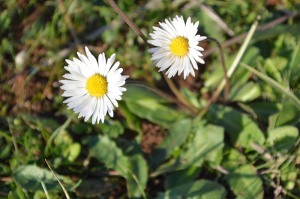
Bellis perennis
Bellis perennis
Common daisy (older name bruisewort)
Tratinčica
Calendula Arvenensis
Calendula arvensis
Field marigold
Neven (calendula officinalis)
Citrus sinensis
Citrus sinensis
Orange
Mandarina
Not a native species, but all kinds of citrus trees grow really well on Hvar!
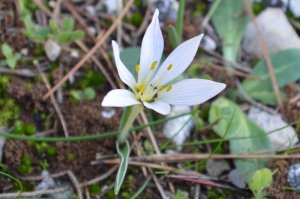
Crocus biflorus
Crocus biflorus
Silvery crocus
Dvocvjetni Šafran
Diplotaxis Tenuifolium
Diplotaxis tenuifolia
Perennial wall-rocket
Uskolisni dvoredac
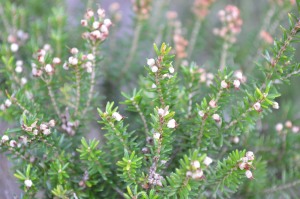
Erica
Erica manipuliflora
(Winter-flowering) heather
Primorski vrijes
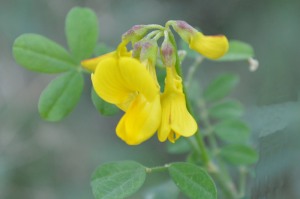
Hippocrepus comosa
Hippocrepus comosa
Horseshoe vetch
Croatian not known
Iberis sempervirens
Iberis sempervirens
Evergreen candytuft
Vazdazelena ognjica
Ipomoea purpurea
Ipomoea purpurea
Purple Morning Glory
Ukrasni slak
Juniperus communis
Juniperus communis
Common juniper
Borovica / Smrča
Juniperus phoenicea
Juniperus phoenicea
Phoenician juniper / Arar
Gluhač / Gluha smrča
The Croatian name translates as deaf juniper, implying this is not the common version.
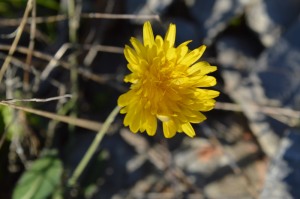
Leontodon
Leontodon
Hawkbit (not to be confused with dandelion)
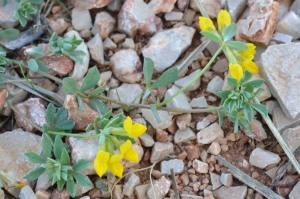
Lotus corniculatus
Lotus corniculatus
Bird’s Foot Trefoil
Svinđuša
Opuntia
Opuntia
Opuntia / Prickly pear
Opuncija / indijska smokva
Introduced from the Americas
pinus-halipensis-aleppo-pine-cones
Pinus halepensis
Aleppo pine
Alepski bor
Pittosporum tobira
Pittosporum tobira
Mock orange
Pitospor
Import from Japan, China and the Far East
Holm oak
Quercus ilex
Holm oak
Hrast crnika / česmina
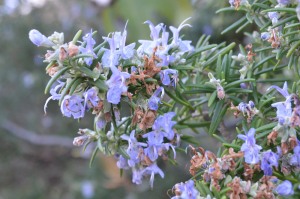
Rosemary
Rosmarinus officinalis
Rosemary
Ružmarin
Sedum
Sedum
Stonecrop
Bijeli žednjak
No flowers at this time of year, but very pretty amongst the rocks!
Bladder campion
Silene vulgaris
Bladder Campion
Pušina
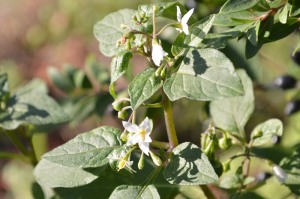
Solanum nigrum
Solanum nigrum
Black nightshade
Crna pomoćnica
Taraxacum
Taraxacum
Dandelion
Maslačak
Vaccinium
Vaccinium myrtillus
Bilberry / blaeberry*
Borovnica **
Viburnum tinus
Viburnum tinus
Laurustinus
Lemprika
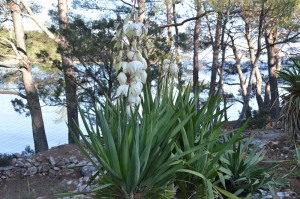
Yucca
Yucca
Yucca
Juka
Another import from the Americas

* Not a misprint, blaeberry is the Scots spelling (see https://sco.wikipedia.org/wiki/Blaeberry). Blueberries are from a related but specifically American plant. Bilberries or blaeberries are a European shrub/tree. Berries look and taste very similar apparently but I like to assume any bushes growing wild on Hvar are the native variety unless they're obvious imports! I have to admit this was actually news to me as I was researching the plants, but luckily Zdravko knew the difference.

** Of course the other thing we know about Borovnica is the very tasty liqueur that is made from them!  For a recipe in Croatian, click here.

© Marion Podolski 2017

You are here: Home Nature Watch Hvar's Wildflowers and Plants in Winter

Eco Environment News feeds

  • UN-backed report finds even temporary rises above Paris agreement target could cause harm to glaciers and polar ice sheets

    Earth’s icy regions face such dangerous melting that global heating should be brought back below 1C after an inevitable period of overshooting global temperature targets, a UN report has found.

    Permanent and widespread losses of snow and ice expose a “persistent myth” that overshooting the 1.5C target of the Paris climate agreement – to 2C or 3C – could be manageable or even preferable to urgent cuts to emissions, the report found.

    Continue reading...

  • Devon nature reserve says ‘reckless’ theft of narrow-headed ant colony sets back years of conservation work

    A nest containing up to 5,000 of England’s rarest ant species has been stolen from a nature reserve, a conservation charity has said.

    Devon Wildlife Trust (DWT) said a nest of narrow-headed ants had been dug up and taken from Chudleigh Knighton Heath nature reserve in south Devon, which is the last place in England where the species still exists.

    Continue reading...

  • Action taken to prevent bottom trawling in the marine protected area and conserve porpoise populations

    Greenpeace activists have dropped boulders in the North Sea to snag the dragnets of industrial trawlers fishing in a marine protected area.

    Activists onboard the Greenpeace ship Arctic Sunrise dropped the giant stones to form an underwater barrier around the Southern North Sea marine protected area (MPA) – the UK’s most bottom-trawled MPA.

    Continue reading...

  • Disruption to winds above Arctic threatens to alter weather patterns across parts of continent in coming weeks

    The stratospheric polar vortex over the northern hemisphere is facing the prospect of an unusually early weakening. Forecast models suggest it could weaken significantly over the next 10 days, when it would typically be strengthening.

    A major sudden stratospheric warming (SSW) event is possible. This could influence weather patterns in the following weeks, increasing the likelihood of persistent areas of high pressure across the mid-latitudes and colder conditions weeks later.

    Continue reading...

  • A Guardian investigation has found that despite a recommendation to slow down, leading shipping companies continue to travel above advised speeds in a key habitat for cetaceans

    Marine biologist Alice Barbarioli waits with her camera trained on the horizon. A few minutes earlier, the hydrophone beneath the Pelagos research vessel detected codas – the sequence of clicks sperm whales use to communicate.

    The sperm whale reveals its head and dorsal fin as those onboard the vessel in the Pelagos sanctuary, a conservation area established to protect marine mammals in the north-western Mediterranean, rush to take photos and note the rhythm of its breathing. After a few minutes, the animal arches its back, and begins to head back into the depths of the sea. They wait to catch a glimpse of its tail.

    Continue reading...

  • Inkpen and Combe, Berkshire: If the price goes down, the village WhatsApp group lights up

    Beyond the reach of the gas mains, there is tension about the coming winter. Many rural homes have an open fire or wood burner, but most rely on kerosene oil for hot water and heating. Since the US-Iran war began, its cost has more than doubled. Currently, 1,000 litres (lasting 10-12 weeks) is £1,219. A year ago, it was £549. Seasoned wood is in demand.

    We watch the oil price rise, with none of the consumer protections afforded to gas customers. If the price per litre drops, as during the June ceasefire, the village WhatsApp group lights up.

    Continue reading...

  • Cop17, focused on protecting nature and restoring ecosystems, concludes on Saturday with critics saying system allows ‘one idiot’ to stall progress

    Calls are growing for major reforms to UN biodiversity summits as countries fail to deliver on their promises to halt the destruction of the natural world, with governments likely on track to continue their record of never having met a target in the 34-year history of the convention.

    Two weeks of negotiations at biodiversity Cop17 in Yerevan, Armenia, concluded on Saturday morning with countries vowing to redouble their efforts to meet this decade’s targets, which include commitments to protect 30% of the planet for nature, restore nearly a third of Earth’s degraded ecosystems and reform $500bn (£410bn) of environmentally damaging subsidies.

    Continue reading...

  • Timau’s industry has provided local Kenyans with an economic lifeline. But now, many believe it has made them seriously ill

    When Reuben Muriki fainted while doing a chore in the compound of his home near the horticultural town of Timau in central Kenya several years ago, it marked the start of a series of increasingly serious health episodes.

    His joints became swollen, his skin became discoloured and he found breathing difficult. He was in and out of hospital, and was forced to quit his work as a pesticide sprayer at a flower farm. Doctors treated him for suspected tuberculosis in vain.

    Continue reading...

  • At more than $52m, the race has become the most expensive in US history, but residents are fed up with flooding

    Aida Havel mulled her fate over coffee after working the early voting polls all day in Kill Devil Hills, North Carolina. “We are trapped,” she concluded.

    The Dare county commission candidate lives about 50 miles (80km) south, on Hatteras Island on the state’s Outer Banks.

    Continue reading...

  • From feeding schoolchildren to recycling tyres, these entrepreneurs are challenging stereotypes while solving social and environmental problems

    Africa is thought to have a higher proportion of female entrepreneurs than any other continent and yet many still struggle to access financing. Four business leaders from Nigeria, Uganda, Kenya and Malawi tell us about the inspiration behind their success – and the challenges women still face.

    Continue reading...

Eco Health News feeds

Eco Nature News feeds