Hvar's Wild Flowers in the Late Summer

Marion Podolski, author of the exquisite blog Go Hvar, continues her illustrated seasonal researches into Hvar's abundant wild flowers.

Bright roadside field marigold, Jelsa October 2016. Bright roadside field marigold, Jelsa October 2016. Photo: Vivian Grisogono

Following on from our Guide to Hvar’s Wildflowers – Spring Edition, I’ve been out and about looking for what’s in bloom at the end of summer. These are mostly in the high country around the peak of Sv Nikola and on the Vorh plateau, although some are down around sea-level, even right on the beach in some cases.

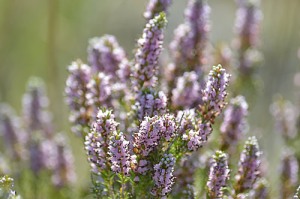
Heather with black pine on Hvar's highest peak. Photo Marion Podolski

I have to say I was encouraged to find so many wildflowers in September, after what has been a scorching summer. My aim in writing the blog is to identify each one, and tag the photos with an official name in Latin, English and Croatian. With my previously somewhat inexpert pictures in mind, this time I was careful to include more of the plant (leaves, seedpods, etc) in my reference photos. And let’s hope the upcoming new series of that wonderful Croatian TV series  Lovac na bilje, (The Plant Hunter) includes  a trip to the Dalmatian coast and islands, as that could really help me identify the plants here!

Flowers on the beach on Sv.Klement. Photo Marion Podolski

Here’s the reference table of late-summer flowers. Usual disclaimer applies: while I have a reasonable confidence in most of the names, some are tentative especially when very similar suspects exist! I’d welcome any feedback from those with a rather better grounding in botany! Click on the images for a bigger picture, and links take you to wikipedia or plantea to find out more.
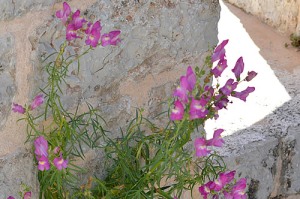
Antirrhinum majus

Antirrhinum majus
Snapdragon
Zijevalica
..........
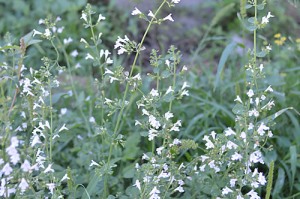
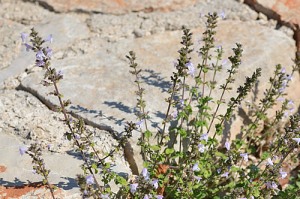
Calamintha napeta

Calamintha napeta
Lesser calamint
Velecvjetna gorska metvica
Mint family but could be wild basil?
..........
..........

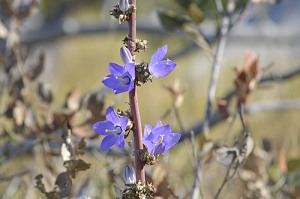
Campanula Pyramidalis

Campanula pyramidalis
Chimney bellflower
Piramidalni zvončić
 ..........

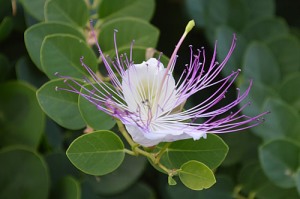
Capparis spinosa

 ..........

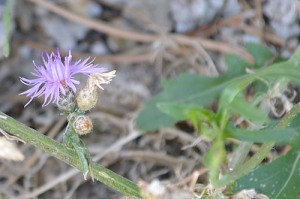
Centaurea glaberrima Tausch

Centaurea glaberrima Tausch or Centaurea jacea
Bare knapweed
Livadna zečina
Not sure exactly which variant of Centaurea this is. Reference pictures differ!
 ..........

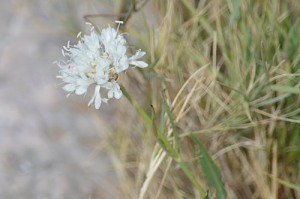
Cephalaria leucantha

Flower head is actually a round ball, hence the Croatian name of White head!
 ..........

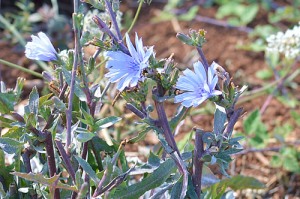
Cichorium intybus

Cichorium intybus
Chicory
Cikorija
 ..........

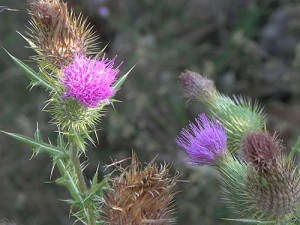
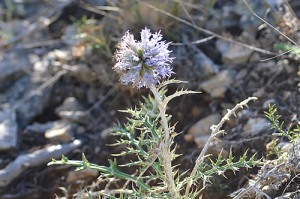
Cirsium vulgare

 ..........

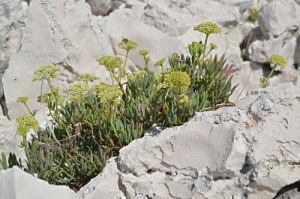
Crithmum maritima

This photo taken on a Sv Klement beach. A similar plant is Salicornia, which turns red as it ages. Both samphire and salicornia are used in cooking.
 ..........

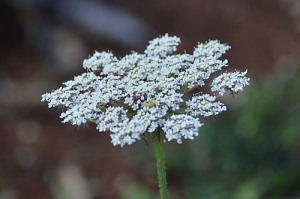
Daucus carota

Daucus carota
Wild carrot
Divlja mrkva
 ..........
 ..........

Dittrichia viscosa

Dittrichia viscosa
Woody or sticky fleabane
Ljepljini oman / brušćinac / bušina
 ..........

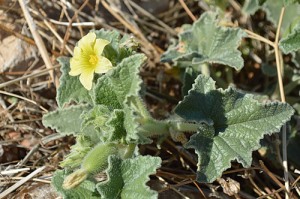
Ecballium

Ecballium
Squirting cucumber
Divlji krastavac
 ..........

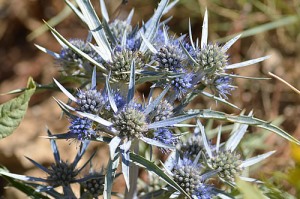
Echinops ritro

Echinops ritro
Southern globethistle
Globus čičak
 ..........
 ..........

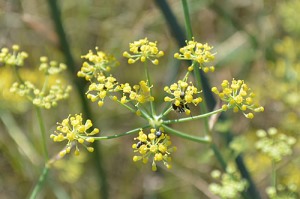
Foeniculum vulgare

 ..........

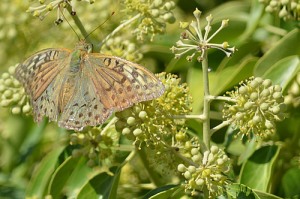
Hedera helix poetarum nyman

This version of ivy is native to southern Europe, and the flowers are high in nectar. Which is why this mound of ivy on Vorh was absolutely swarming with happy bees and butterflies! This one is a Cardinal.
 ..........

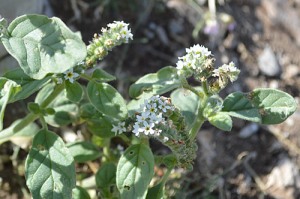
Heliotropium europaeum

 ..........

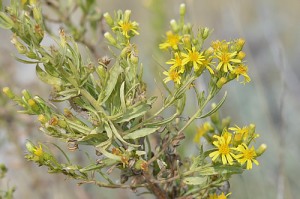
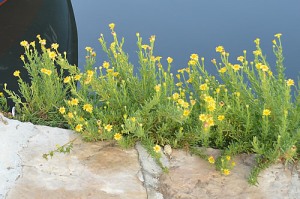
Inula crithmoides

Inula Crithmoides / Limbarda crithmoides
Golden Samphire
Primorski oman
Compare to samphire/motar above
..........

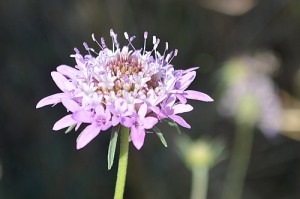
Knautia arvenensis

 ..........

Limonium cancelatum

Limonium cancelatum
Lattice sea-lavender
Rešetkasta mrižica or Rešetkasta travulja
This tiny variant of sea-lavender appears to be local to Croatia. Seen on Sv Klement beach.
 ..........

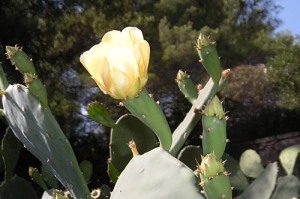
Opuntia ficus-indica

Opuntia ficus-indica
Opuntia / prickly pear
Opuncija
An exotic import from Mexico that grows well here!
 ..........

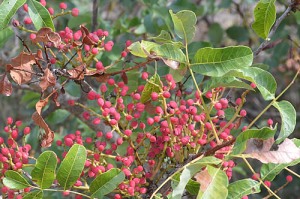
Pistacia terebinthus

The berries on this bush are really pretty, but the Croatian name is “Smelly“
 ..........

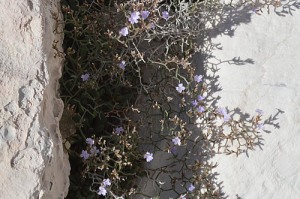
Plumbago europaea

Plumbago europaea
Common leadwort
Vranjemil?
Few references  even mention this European version of plumbago! Flower looks very similar to the Scilla (below), but this has 5 petals, not 6 and the clusters are different.
 ..........

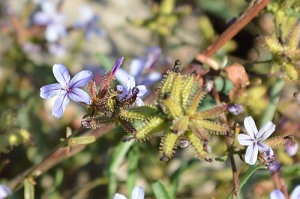
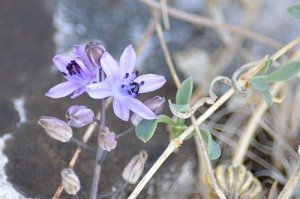
Scilla autumnalis

Scilla autumnalis or Prospero autumnale
Autumn squill
Jesenji procjepak
In this case, the leaves are misleading as they belong to another plant!
 ..........

Sonchus asper

Sonchus asper
Perennial sow-thistle
Modrozeleni ostak or Kostriš
 ..........

“Weeds are flowers too, once you get to know them” ~ A.A. Milne

© Marion Podolski 2016

 This article has been reproduced with kind permission from Marion's blog Go Hvar, Ramblings about a far island. Visit the blog for all kinds of information about Hvar, from artistic to epicurean!


You are here: Home Nature Watch Hvar's Wild Flowers in the Late Summer

Eco Environment News feeds

  • Ministers urged to go further than proposed cut to 110 decibels to ease acute stress on birds and others animals

    Campaigners are calling on the government to protect the welfare of wild animals by cutting the maximum noise level of fireworks sold to the public from 120 to 90 decibels.

    The Center for Wild Animal Welfare (CWAW) has said lowering the limit to 90 decibels – which is about one-eighth of the loudness of 120 decibels – would help to protect millions of wild animals from acute stress by reducing the area over which a firework disturbs surrounding wildlife.

    Continue reading...

  • British Veterinary Association president tells MPs surge in cases putting farmers under severe pressure and stress

    The worst bluetongue season on record has been a major animal welfare crisis in Great Britain, MPs have been told, putting farmers under “severe emotional stress”.

    Bluetongue, a viral disease that affects sheep, cattle and goats, can cause fever, lesions, stillbirths and death. The tongue may go blue and protrude from the mouth.

    Continue reading...

  • Researchers find the birds’ guano feeds algal blooms that absorb significantly more solar energy

    Penguin poo is making the Antarctic snow melt faster, a study shows. As temperatures rise, penguins are waddling closer to the south pole, with potential for this previously unrecognised phenomenon to affect a wider area.

    Snow algae are tiny single-celled plants that make a home in some of the coldest places on Earth. When nutrients are scarce, the algae produces red pigments to protect itself from the sun and slow growth.

    Continue reading...

  • Farmers in Gurez store their harvests underground to last the Himalayan winter. As the practice fades, local varieties and handed-down skills are disappearing too

    Hajra Begum rolls a potato in her hands, checking its skin for cuts, soft spots and signs of rot. After a day harvesting in her family’s field in Chorwan, a remote mountain village in Gurez, Indian-administered Kashmir, she is sorting the crop for winter storage. Some of the potatoes will feed her family through the cold months; others will be saved for planting in spring.

    “It should be perfect for planting,” she says. “If you keep a bad potato, you will waste the whole next year.”

    Continue reading...

  • Frome, Somerset: Dippers and fritillaries and pink campion … there is a deep satisfaction in accumulating associations with a regular haunt

    Enchantment surely fills the eyes of first-time visitors who come upon this little stone bridge over the stream. Do they marvel at the judgment of hands in building, wedding rock with rock, face against face? Do they arrive on a brighter morning than this, one on which sunbeams chase each other under the arch and cast sparkling reflections of water on the underside? Does their pulse quicken watching the brook breaking out of its tunnel and skittering over the pebbled bed, hastening through even in times of sluggish drought?

    Me? I see a bird that isn’t there.

    Continue reading...

  • Guardian and Mongabay reveal approaches to officials and MPs on behalf of Vantara zoo ahead of UK-chaired Cites meeting on endangered animal imports

    British government ministers were told not to engage formally with Vantara, the controversial mega-zoo run by the Indian billionaire Anant Ambani, after lobbying efforts by the private animal sanctuary in the run-up to a UK-chaired meeting on the trade in endangered species, according to documents.

    This week, the UK heads a 32-country committee meeting in Geneva of Cites, the United Nations body that regulates trade in endangered species. The meeting will examine how India has responded to compliance concerns about imports of endangered animals.

    Continue reading...

  • Cop30 host sets out steps to break link with coal, oil and gas as it aims to move focus from negotiating to implementing

    All countries can start to break their dependence on fossil fuels now without needing to wait for new technologies or economic changes, Brazil’s government has said ahead of a global climate summit.

    Brazil, the host of last year’s UN climate conference, set out the world’s first global “roadmap” for phasing out fossil fuels on Tuesday, showing that countries could boost their economies and pull people out of poverty while breaking the link with coal, oil and gas.

    Continue reading...

  • We are raiding the Guardian long read archives to bring you some classic pieces from years past, with new introductions from the authors

    This week, from 2023: A year ago, Germany’s vice-chancellor was one of the country’s best-liked public figures. Then came the tabloid-driven backlash. Now he has to win the argument all over again

    By Philip Oltermann. Read by Sam Peter Jackson

    Read the text version here

    Support the Guardian today: theguardian.com/longreadpod

    Continue reading...

  • With globe-spanning artists – including Charlotte Church doing angry electropop – the Flow project is hoping to make an impact at this month’s Cop31

    Amid tense and long-winded negotiations, and with the future of the planet at stake, emotions can often run high at Cop climate summits. But last year, when the annual conference arrived in Brazil, one UN official was unexpectedly moved to tears by five women singing about the power of water.

    “She gave me a massive hug after the event and said, ‘We need to bring music into Cop,’” says Nikita Llerena, the project manager for Flow, a music collective that’s hoping to bring art to the centre of the climate movement. What started as a handful of musicians meeting over Zoom last year has grown into a full-length album that unites female artists from around the world, including Charlotte Church, Maxine Peake and Nadine Shah. This month, members of the collective will return for Cop31, in Turkey, where they have been promoted to a slot at Global Cultural Action’s opening event.

    Continue reading...

  • Scientist Adalberto Luis Val’s pioneering research on the tambaqui fish is revealing the effect of climate disruption in Brazil, with global implications for biodiversity and food security

    As a boy in rural São Paulo, Adalberto Luis Val used to stare into the lake where his father took him fishing and wonder how all those creatures swimming below stayed alive. One day, he netted a few, put them in a jar, and brought them home to observe. The next morning, they were all dead. Val was devastated but intrigued.

    “I needed to know how fish are able to live,” he says.

    Continue reading...

Eco Health News feeds

Eco Nature News feeds