Hvar's Wild Flowers in the Late Summer

Marion Podolski, author of the exquisite blog Go Hvar, continues her illustrated seasonal researches into Hvar's abundant wild flowers.

Bright roadside field marigold, Jelsa October 2016. Bright roadside field marigold, Jelsa October 2016. Photo: Vivian Grisogono

Following on from our Guide to Hvar’s Wildflowers – Spring Edition, I’ve been out and about looking for what’s in bloom at the end of summer. These are mostly in the high country around the peak of Sv Nikola and on the Vorh plateau, although some are down around sea-level, even right on the beach in some cases.

Heather with black pine on Hvar's highest peak. Photo Marion Podolski

I have to say I was encouraged to find so many wildflowers in September, after what has been a scorching summer. My aim in writing the blog is to identify each one, and tag the photos with an official name in Latin, English and Croatian. With my previously somewhat inexpert pictures in mind, this time I was careful to include more of the plant (leaves, seedpods, etc) in my reference photos. And let’s hope the upcoming new series of that wonderful Croatian TV series  Lovac na bilje, (The Plant Hunter) includes  a trip to the Dalmatian coast and islands, as that could really help me identify the plants here!

Flowers on the beach on Sv.Klement. Photo Marion Podolski

Here’s the reference table of late-summer flowers. Usual disclaimer applies: while I have a reasonable confidence in most of the names, some are tentative especially when very similar suspects exist! I’d welcome any feedback from those with a rather better grounding in botany! Click on the images for a bigger picture, and links take you to wikipedia or plantea to find out more.
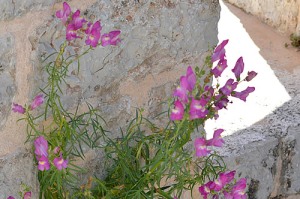
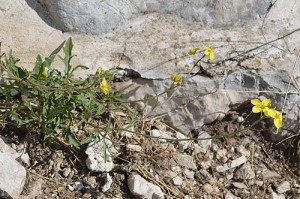
Antirrhinum majus

Antirrhinum majus
Snapdragon
Zijevalica
..........
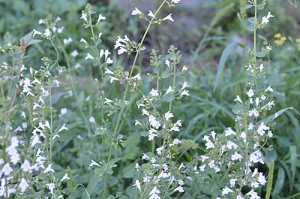
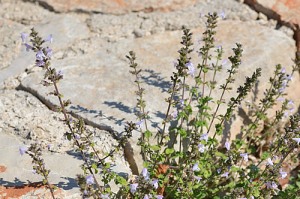
Calamintha napeta

Calamintha napeta
Lesser calamint
Velecvjetna gorska metvica
Mint family but could be wild basil?
..........
..........

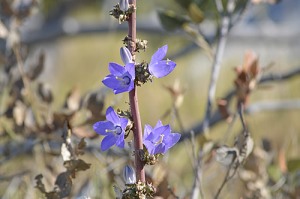
Campanula Pyramidalis

Campanula pyramidalis
Chimney bellflower
Piramidalni zvončić
 ..........

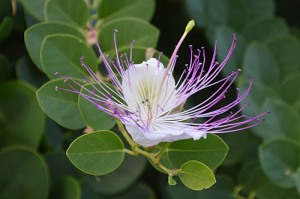
Capparis spinosa

 ..........

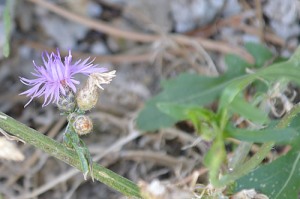
Centaurea glaberrima Tausch

Centaurea glaberrima Tausch or Centaurea jacea
Bare knapweed
Livadna zečina
Not sure exactly which variant of Centaurea this is. Reference pictures differ!
 ..........

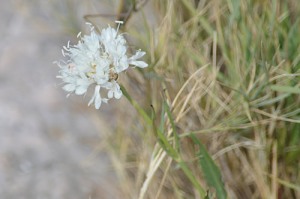
Cephalaria leucantha

Flower head is actually a round ball, hence the Croatian name of White head!
 ..........

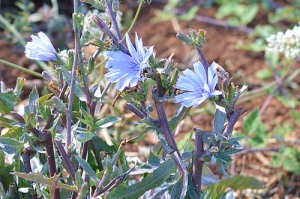
Cichorium intybus

Cichorium intybus
Chicory
Cikorija
 ..........

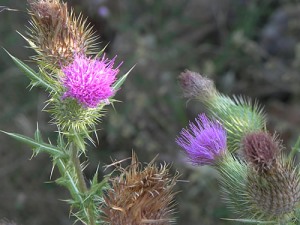
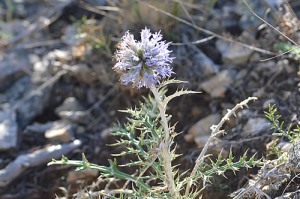
Cirsium vulgare

 ..........

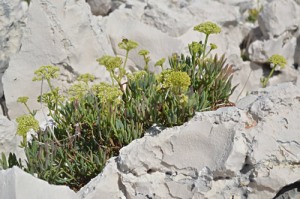
Crithmum maritima

This photo taken on a Sv Klement beach. A similar plant is Salicornia, which turns red as it ages. Both samphire and salicornia are used in cooking.
 ..........

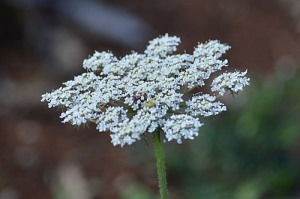
Daucus carota

Daucus carota
Wild carrot
Divlja mrkva
 ..........
 ..........

Dittrichia viscosa

Dittrichia viscosa
Woody or sticky fleabane
Ljepljini oman / brušćinac / bušina
 ..........

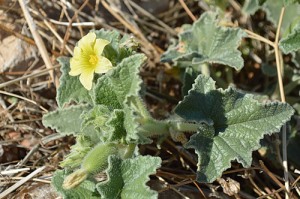
Ecballium

Ecballium
Squirting cucumber
Divlji krastavac
 ..........

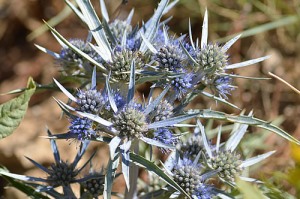
Echinops ritro

Echinops ritro
Southern globethistle
Globus čičak
 ..........
 ..........

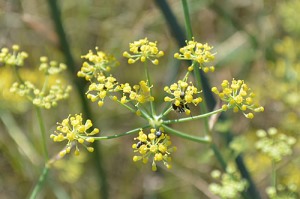
Foeniculum vulgare

 ..........

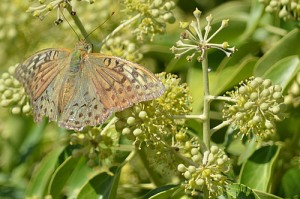
Hedera helix poetarum nyman

This version of ivy is native to southern Europe, and the flowers are high in nectar. Which is why this mound of ivy on Vorh was absolutely swarming with happy bees and butterflies! This one is a Cardinal.
 ..........

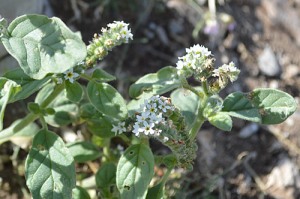
Heliotropium europaeum

 ..........

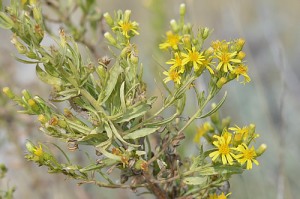
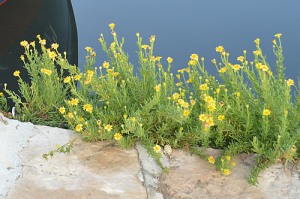
Inula crithmoides

Inula Crithmoides / Limbarda crithmoides
Golden Samphire
Primorski oman
Compare to samphire/motar above
..........

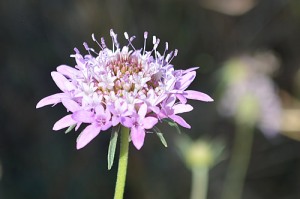
Knautia arvenensis

 ..........

Limonium cancelatum

Limonium cancelatum
Lattice sea-lavender
Rešetkasta mrižica or Rešetkasta travulja
This tiny variant of sea-lavender appears to be local to Croatia. Seen on Sv Klement beach.
 ..........

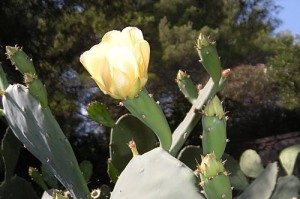
Opuntia ficus-indica

Opuntia ficus-indica
Opuntia / prickly pear
Opuncija
An exotic import from Mexico that grows well here!
 ..........

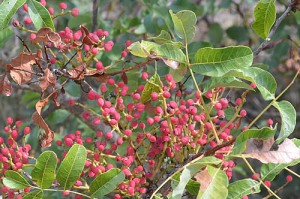
Pistacia terebinthus

The berries on this bush are really pretty, but the Croatian name is “Smelly“
 ..........

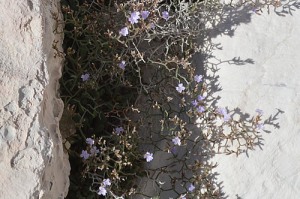
Plumbago europaea

Plumbago europaea
Common leadwort
Vranjemil?
Few references  even mention this European version of plumbago! Flower looks very similar to the Scilla (below), but this has 5 petals, not 6 and the clusters are different.
 ..........

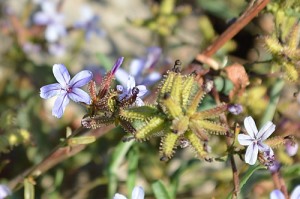
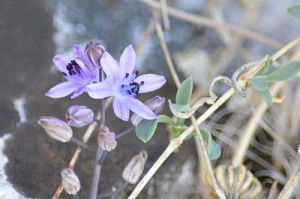
Scilla autumnalis

Scilla autumnalis or Prospero autumnale
Autumn squill
Jesenji procjepak
In this case, the leaves are misleading as they belong to another plant!
 ..........

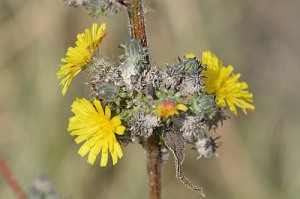
Sonchus asper

Sonchus asper
Perennial sow-thistle
Modrozeleni ostak or Kostriš
 ..........

“Weeds are flowers too, once you get to know them” ~ A.A. Milne

© Marion Podolski 2016

 This article has been reproduced with kind permission from Marion's blog Go Hvar, Ramblings about a far island. Visit the blog for all kinds of information about Hvar, from artistic to epicurean!


You are here: Home Nature Watch Hvar's Wild Flowers in the Late Summer

Eco Environment News feeds

  • Environment Agency assessments find just 14.3% of country’s surface waters in good ecological status

    Every single English water body is polluted with toxic chemicals, new government data shows, while just 14.3% of surface waters achieved good ecological status.

    Each of the country’s rivers, lakes and estuaries was assessed by the Environment Agency as part of a six-yearly evaluation of England’s water quality. The EA checked for a range of toxic chemicals, from Pfas – or “forever chemicals” – to microplastics. Waters were also checked against a range of standards covering wildlife, water quality and physical habitat.

    Continue reading...

  • The palm-sized greengrocer is bright, loud and abundant, and has long been a collectible item for Australian children

    Before marbles, stamps and trading cards, there were cicadas.

    There are thousands of cicada species globally, but for Australian children the craze centres on one particularly collectible item: the greengrocer.

    Continue reading...

  • As NHS told to prepare for extreme weather, strain also felt in other areas including transport and farming

    The NHS has been told it must become more resilient to increasingly frequent heatwaves supercharged by the climate crisis, as the UK government puts adaptation to extreme heat high on its agenda. But what other public services are already feeling the strain?

    Continue reading...

  • As another summer of extreme heat rumbles on, warnings about excess deaths, ageing infrastructure and potential food shortages are growing louder. So how well prepared is the UK to cope, both now and in the years ahead? Jessica Elgot and Alexandra Topping examine why politicians have been so slow to act.

    Plus, Kemi Badenoch has distanced herself from the former neo-Nazi turned Tory council candidate Joshua Bonehill-Paine, only to offer him him an advisory role instead. What was she thinking?

    You can read Jessica Elgot’s interview with the health secretary on heatwaves here

    You can read about Kemi Badenoch’s action on Joshua Bonehill-Paine here

    Please keep sending your comments and questions to [email protected]

    Follow and subscribe to the Politics Weekly YouTube channel here

    Continue reading...

  • UN forecasters warn of worsening conditions in 45 countries currently experiencing severe food insecurity

    About 50 million people are likely to be pushed into acute hunger before the end of next year by the rapidly developing El Niño weather system, according to forecasting.

    This is in addition to the hundreds of millions of people already facing dangerous levels of hunger, owing to years of drought in parts of Africa and pressure on food prices from the war in Iran.

    Continue reading...

  • South Devon: On holiday in deeply familiar places, we swim fully clothed, snack on overhanging cherries and see the fallen Teignmouth pier

    The West Country unrolls down the M4, then M5, under the kind of vintage-yellow hue produced by 35mm camera film where the light’s leaked in. Many fields have been harvested as early as we’ve ever witnessed on this deeply familiar route. Burnt black patches remind us just how flammable the countryside is.

    We are exploring places we’ve only passed through before, via a farm-stay in a shepherd’s hut at West Town Farm, Ide. Our parking instructions urge us to allow the farmer to pass in her tractor. The gender reveal is so refreshing I want to cheer. Tenant Kate Sharp farms Hereford-cross beef cattle, Devon closewool and Exmoor horn sheep, as well as some lively Oxford sandy and black pigs, red as the Devon soil itself.

    Continue reading...

  • Changing paved areas to grass and planting trees can reduce urban heat island effect by as much as 1C, study shows

    Add together all the UK’s household gardens and they cover an area three times larger than all the country’s nature reserves combined. But as the demand for car parking increases, many front gardens are being paved over, with research showing that this loss of green is adding to the urban heat island effect, particularly at night.

    In 2005, about 7.5% of the UK’s front gardens were paved; by 2025 that had risen to 55%, according to Royal Horticultural Society estimates. Those hard surfaces absorb heat during the day and then slowly release the heat overnight. By contrast, leafy green gardens release moisture into the atmosphere, which helps to cool the air as the water evaporates.

    Continue reading...

  • On my TikTok I find trash that’s blowing in the wind, and mimic its movements using what I have to hand

    I’ve always been interested in the concept of value and what is thought of as rubbish. When people throw things away, a perfectly good table, say, I think, “That’s still usable.” I’m a dancer and choreographer and hoard clothing – costumes from shows or pieces my mum has lent me. Sometimes, I’ll collect random things offered on Facebook.

    During the pandemic I was unable to perform but became hyper-aware of everyday movements around me. On daily walks in Los Angeles, where I live, I’d notice pieces of litter being blown about. I felt as if it was trying to get someone’s attention, but nobody was looking. I thought: “What if I start mimicking it? What if I used the trash as my choreographer?”

    Continue reading...

  • Forty years ago there were more than 22 sheep to every New Zealander, but wool prices and production declined with the uptake of synthetic alternatives

    John Hargreaves’ family has farmed sheep and beef in Kaiwaka, north of Auckland, for generations. In the 1960s they had 3,000 ewes but in the decades since, as the value of wool declined and shearing costs grew, his flock slowly decreased to just over 1,700.

    But now, for the first time in roughly six years, his wool is making money.

    Continue reading...

  • Plans involve dredging and expanding docks to allow larger cruise ships to visit with up to 200,000 passengers annually

    Janavi Kramer had just enjoyed a swim with friends and was sitting on a bench taking in a wonderful Cornish view – headlands plunging into deep water, bobbing boats, a bustling harbour town.

    “We’re lucky to have this space,” said Kramer, who is an artist and scientific illustrator. “We use it for work, recreation and pleasure and it’s so scary to think that this could all be harmed. I worry about what we may be living with soon and what we’ll be leaving for future generations.”

    Continue reading...

Eco Health News feeds

Eco Nature News feeds